
Occupational Therapy in Jalandhar for Children

At Mainstream CDC, we offer personalized occupational therapy to help children develop essential life skills, improve coordination, and build confidence in daily activities. Our experienced occupational therapists use proven, child-centered techniques to support each child’s growth, learning, and independence.

Trusted Occupational Therapy Clinic in Jalandhar

Certified & Experienced Occupational Therapists

Our sessions are guided by licensed therapists who follow evidence-based methods to enhance each child’s daily functional abilities and confidence.

Personalized Therapy Plans

Every child receives a customized plan focused on their unique strengths and developmental needs for more meaningful progress.

Focus on Independence

We help children build essential self-care, motor, and cognitive skills to participate confidently in daily routines and school activities.

Engaging, Play-Based Approach

Therapy sessions use fun, activity-based techniques to keep children motivated while achieving developmental goals.

Collaboration with Families

We work closely with parents and caregivers, providing guidance and home strategies to ensure continued progress beyond the clinic.

Looking for an Occupational Therapist in Jalandhar?

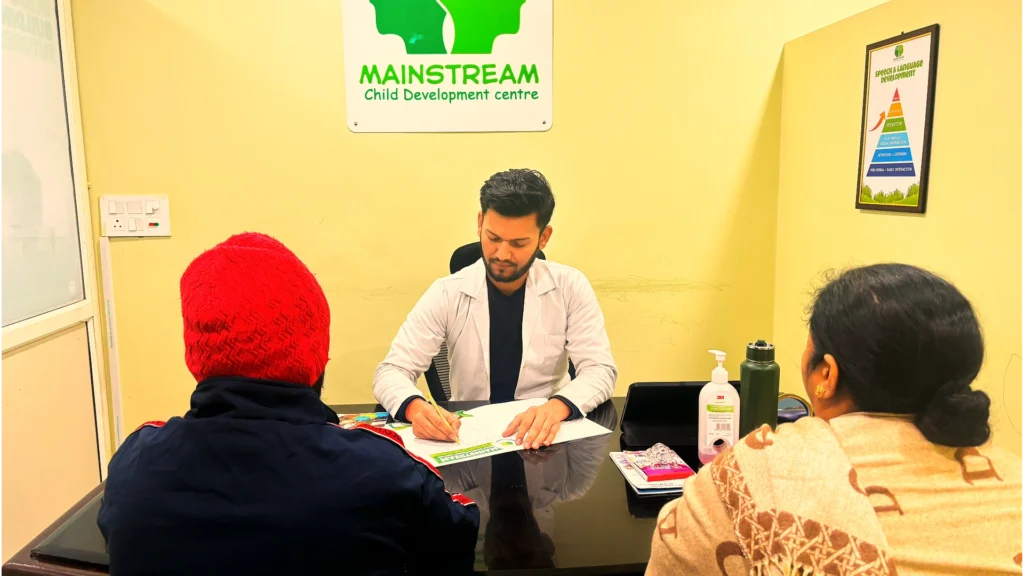
Looking for an Occupational Therapist in Jalandhar? Everyday challenges like poor focus, sensory issues, or difficulties with movement and self-care can affect a child’s learning, confidence, and independence. Whether your child struggles with developmental delays, fine motor coordination, or adapting to everyday routines, the right occupational therapy can make all the difference. At Mainstream CDC, we provide comprehensive occupational therapy services in Jalandhar tailored to each child’s specific needs. Each session aims to boost coordination, regulate sensory input, and promote meaningful progress in daily routines. The program is led by Dr. Ravi Bhardwaj, a BOT graduate from IMS BHU, holding ADL Certification, Special Child Certification, and an AIOTA Certificate. With his expertise and compassionate approach, we ensure every child receives focused, personalized care that empowers progress at home, in school, and beyond.

Conditions We Treat:

Autism Spectrum Disorder (ASD)

Enhances sensory processing, attention, and daily living skills through structured and engaging activities.

Attention Deficit Hyperactivity Disorder (ADHD)

Improves focus, organization, and self-regulation using tailored strategies and skill-building exercises.

Developmental Coordination Disorder (DCD)

Strengthens motor planning, balance, and coordination for smoother participation in physical and daily tasks.

Sensory Processing Disorder (SPD)

Helps children manage sensory challenges for better comfort, focus, and behavioral responses.

Cerebral Palsy

Promotes fine motor control, muscle coordination, and independence in self-care and school activities.

Learning Disabilities

Enhances handwriting, visual-motor integration, and cognitive organization to support academic performance.

Down Syndrome

Builds muscle tone, coordination, and adaptive skills to improve self-care and social participation.

Delayed Milestones

Addresses delays in motor, sensory, or cognitive skills to foster age-appropriate development and independence.

Occupational Therapy Services in Jalandhar

How Occupational Therapy Works?

Comprehensive Assessment

Each program begins with a detailed evaluation of the child’s motor, sensory, and cognitive abilities.

Goal Setting

Therapists collaborate with parents to set clear, measurable goals tailored to the child’s unique needs.

Individualized Therapy Plan

A customized plan combines targeted exercises, sensory activities, and functional tasks for focused improvement.

Play Based Learning

Engaging, child-friendly activities keep therapy enjoyable while strengthening skills needed for daily life.

Continuous Monitoring & Support

Progress is regularly reviewed, and strategies are adjusted for lasting growth at home and school.

Why Patients Trust Our Occupational Therapy Clinic in Jalandhar

Expert and Certified Therapists

Led by Dr. Ravi Bhardwaj, our skilled therapists use advanced, evidence-based methods for effective outcomes.

Personalized Care Plans

Each child receives an individualized therapy program tailored to their developmental needs and strengths.

Play-Based and Engaging Sessions

Fun, activity-driven sessions keep children motivated while developing crucial motor and sensory skills.

Parent Involvement and Guidance

We collaborate with parents, offering training and home strategies to support continued progress.

Modern Facilities and Tools

Our clinic is equipped with safe, child-friendly equipment to enhance therapy outcomes and comfort.

Proven Results and Trust

Families across Jalandhar trust us for our consistency, transparency, and commitment to every child’s growth.

What does an occupational therapist do?

An occupational therapist (OT) helps people of all ages do the everyday activities that matter most to them—like getting dressed, eating, writing, playing, working, or moving safely around the home and school. They assess difficulties related to physical, sensory, cognitive, or emotional challenges and then design practical strategies, exercises, and adaptations to improve independence and participation.

What’s the difference between OT and PT?

Physical therapy (PT) focuses mainly on improving movement, strength, balance, and pain, so a person can move their body better. Occupational therapy (OT) focuses on helping a person do the tasks they need and want to do every day—like self‑care, schoolwork, or play—often by adapting the task, environment, or using tools. Sometimes a child or adult works with both an OT and a PT as part of a full rehabilitation plan.

What does an OT do exactly?

An OT evaluates skills such as fine motor control, coordination, attention, sensory processing, and self‑care abilities. Based on that, they create individualised goals and activities (therapy sessions) to build skills, modify the environment (for example, better seating or classroom setup), recommend adaptive equipment, and teach strategies to families and teachers so the child or adult can function more independently in daily life.

What is the primary role of an occupational therapist?

The primary role of an occupational therapist is to enable people to participate in meaningful everyday “occupations”—such as self‑care, school, work, play, and social roles—despite physical, cognitive, developmental, or emotional challenges. They promote independence, safety, and participation through skill development, environmental adaptations, and family or caregiver education.

Why would someone be referred to an occupational therapist?

A person may be referred to an OT if they have difficulty with daily tasks due to conditions such as developmental delays, autism, ADHD, learning difficulties, cerebral palsy, injuries, neurological conditions (like stroke), sensory‑processing issues, mental‑health concerns, or low muscle tone. Referrals are common when a child struggles with handwriting, dressing, feeding, focus, emotional regulation, or participating at school or home.

What are the 9 occupations in occupational therapy?

In occupational therapy, “occupations” refer broadly to the main areas of life people do every day. Commonly listed categories include:

  1. Activities of daily living (ADLs): bathing, dressing, toileting, eating.

  2. Instrumental activities of daily living (IADLs): cooking, laundry, managing money, using transport.

  3. Rest and sleep routines.

  4. Education and school‑related tasks.

  5. Work and vocational activities.

  6. Play and leisure.

  7. Social participation and relationships.

  8. Spiritual and religious activities.

  9. Health and well‑being management (including using therapy, medication, or self‑regulation strategies).

(Exact wording may vary slightly by framework, but these nine areas cover the core “occupations” therapists address.)

Is an OT considered a doctor?

An occupational therapist is a licensed healthcare professional, but they are not a medical doctor (MD/DO). In many countries, OTs hold a master’s or doctoral degree in occupational therapy and must complete supervised fieldwork and pass a licensing exam. They work alongside doctors, nurses, psychologists, and other specialists as part of a broader treatment or school‑support team.