Speech-language pathologists conduct primary assessments; ENT specialists check for physical causes like hearing or structural issues.

Speech articulation disorder is a neurodevelopmental speech sound disorder characterized by difficulties producing certain speech sounds accurately and consistently, making speech unclear or hard to understand. This page draws on recent, reputable evidence to explain what speech articulation disorder is, how common it is in India, signs to watch for, causes and risk factors, how it’s diagnosed, related conditions, when to seek help, and the impact of early intervention, education, and daily life on affected children. The goal is to provide clear, practical, and compassionate information for families, educators, and communities. Articulation involves precise tongue, lip, jaw, and palate movements to form sounds; errors persist beyond typical development, varying from substitutions (e.g., “wabbit” for “rabbit”) to omissions or distortions. Most children improve with age and therapy, but severity influences clarity across languages like Hindi or English.

Estimating prevalence in India is challenging due to limited standardized studies and multilingual contexts. But data suggests:

Children may drop sounds, saying “ba” for “ball” or “schcool” for “school.” This persists past age 3-4 when peers clarify words. It affects word learning and confidence in speaking.
Common swaps like “tat” for “cat” (/k/ to /t/) or “fing” for “thing” (/th/ to /f/). Errors follow patterns but hinder intelligibility. Parents notice peers understanding the child less.
Sounds like /s/, /r/, or /l/ emerge slushy or imprecise, as in “thun” for “sun.” Distortions resist self-correction. They impact social interactions and reading aloud.
A sound might be correct sometimes (“rabbit” right, “raccoon” wrong). Inconsistency signals motor planning issues. It frustrates children during conversations.
Visible struggle with mouth movements or tension when trying sounds. Kids may avoid words or use gestures instead. Effort signals need for targeted therapy.
By age 3, most use 75% of consonants; delays show fewer sounds. Milestones vary by Indian languages, but screening helps.
Issues like tongue-tie, cleft palate, or dental problems hinder sound formation. Most resolve with minor fixes or therapy. Early checks aid outcomes.
Frequent ear infections or hearing loss prevent accurate sound modeling. Fluid buildup common in India affects processing. Hearing tests are routine.
Weak oral muscles or coordination (e.g., childhood apraxia) from brain differences. Genetics or prematurity contribute. Therapy strengthens skills.
Genetic links in speech motor control run in families. Siblings may share traits. Environment amplifies risks.
Early births disrupt oral development. NICU stays heighten vulnerability. Follow-up screenings catch issues.
Multilingual homes don’t cause it but rapid switching stresses production if underlying issues exist. Support balances languages.

Diagnosis involves a comprehensive speech-language evaluation by trained pathologists, including sound inventories, oral-motor exams, hearing screens, and parent interviews. Tools assess intelligibility across words and sentences, following ASHA guidelines adapted for Indian languages. Multidisciplinary input from ENT specialists or dentists rules out physical causes. India advances early screening in schools and clinics for timely therapy.
Chronic ear infections or fluid buildup (otitis media) muffles sound input, preventing accurate imitation of speech sounds. In India, this is prevalent due to frequent infections in young children. Treatment like tubes or antibiotics clears hearing, allowing articulation therapy to progress effectively. Early audiology checks are essential alongside speech evaluations.
Expressive or receptive delays often overlap, where unclear sounds compound struggles with vocabulary or grammar. Children may understand but can’t produce words clearly, or vice versa. Holistic therapy targets both sound production and language structure for better communication. Integrated assessments distinguish and address co-occurring issues promptly.
Social communication challenges in autism frequently include articulation errors from motor planning differences. Repetitive behaviors or sensory sensitivities can delay sound mastery. Tailored interventions combine speech therapy with social skills training. Multidisciplinary teams ensure comprehensive support for dual diagnoses.
Attention difficulties slow therapy retention and practice of sounds, leading to inconsistent progress. Impulsivity may cause rushed speech with more errors. Combined behavioral strategies improve focus during sessions. School accommodations help sustain gains in both areas.
Seek evaluation if there are persistent concerns about a child’s speech sound production, intelligibility, or oral motor efforts that interfere with daily activities and communication. Early referral to a speech-language pathologist, developmental pediatrician, or ENT specialist is recommended when red flags appear, especially if sounds are unclear past age 4 or if there are noticeable gaps compared to peers. Early action is crucial because it opens access to targeted interventions that support clear speech, social confidence, and language growth, and it helps families connect with services and supports sooner.


Early intervention helps children master precise speech sounds through targeted therapy and play-based drills. This takes advantage of brain plasticity during critical developmental periods when speech motor skills develop rapidly. Clearer speech improves peer interactions, reduces misunderstandings, and boosts confidence in social settings. Over time, intelligibility enhances overall communication and academic participation.
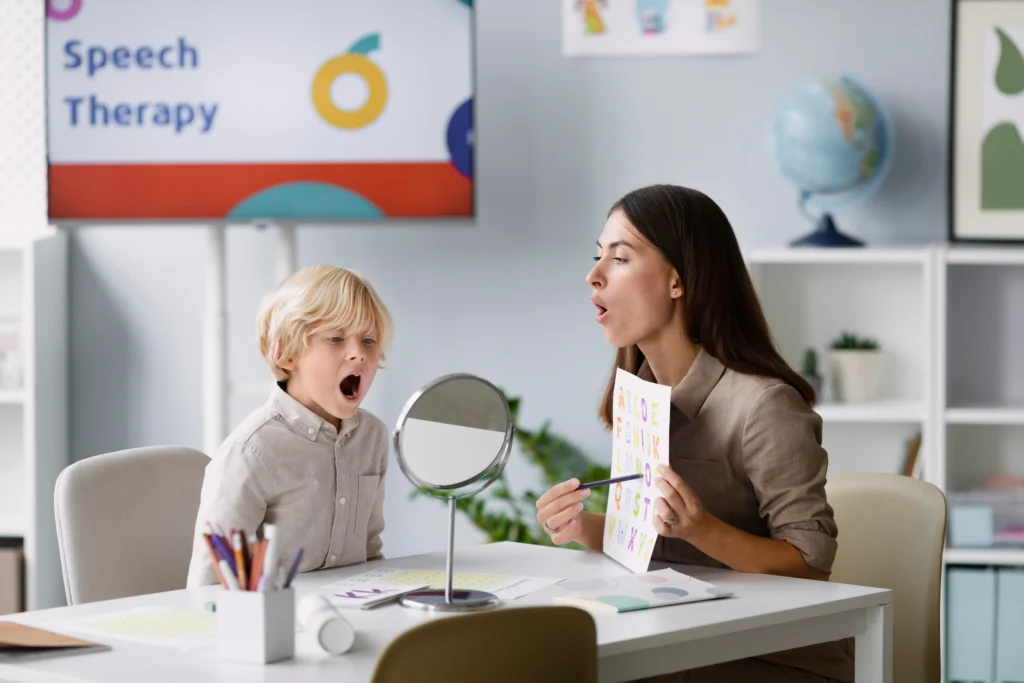
Therapy introduces exercises to strengthen tongue, lips, and jaw for accurate sound production. Children gain control over complex movements needed for challenging sounds like /r/ or /s/. These foundational skills support eating, drinking, and expressive speech. Consistent practice leads to smoother transitions to advanced language use.
Unclear speech often leads to repeated requests or withdrawal from conversations. Early support identifies errors quickly and teaches alternatives, minimizing emotional distress. Children feel understood, encouraging more talking and social engagement. Families experience less daily frustration with improved interactions.
Accurate articulation lays groundwork for phonological awareness essential to reading and spelling. Therapy prevents cascading effects on vocabulary growth and writing skills. Early gains promote school readiness and long-term learning success. Integrated approaches ensure holistic communication progress.

Articulation errors are just baby talk that kids outgrow.
Persistent errors past age 4-5 signal a disorder needing therapy; most resolve naturally, but untreated cases affect confidence.
Bilingualism causes speech sound disorders.
Languages don't cause it, though accents emerge normally; underlying motor issues do, and therapy works across tongues.
It's always due to tongue-tie or hearing problems.
Structural issues contribute in some, but most stem from motor learning; full assessments pinpoint causes.
Speech therapy is only drills and no fun.
Play-based, game-filled sessions engage kids effectively, accelerating gains through motivation.


Speech articulation disorder involves difficulty producing speech sounds accurately and consistently, leading to unclear speech beyond typical developmental ages.
By age 4-5 years, most speech should be intelligible to strangers; complex sounds like /r/, /s/, /th/ may develop up to age 8.
Articulation focuses on motor production of individual sounds; phonological involves rule-based sound patterns in the language system.
Yes, poor sound accuracy hinders phonological awareness crucial for phonics, spelling, and literacy development in school.
No, while hearing problems or tongue-tie contribute in some cases, most stem from motor learning challenges treatable with therapy.
Duration varies from 6 months to 2 years depending on severity; consistent home practice accelerates progress significantly.
No, bilingual children develop speech normally; temporary sound mixing occurs, but persistent errors need evaluation regardless of languages spoken.
Model correct sounds slowly during play, read picture books together, use mirrors for mouth watching, and avoid excessive corrections.
Severe, untreated cases may linger, affecting confidence and career communication, but early intervention typically resolves by school age.
Speech-language pathologists conduct primary assessments; ENT specialists check for physical causes like hearing or structural issues.